2026-10-19 · Mike Santos
Long-Term Dumpster Rental Considerations for Houston Property Flips
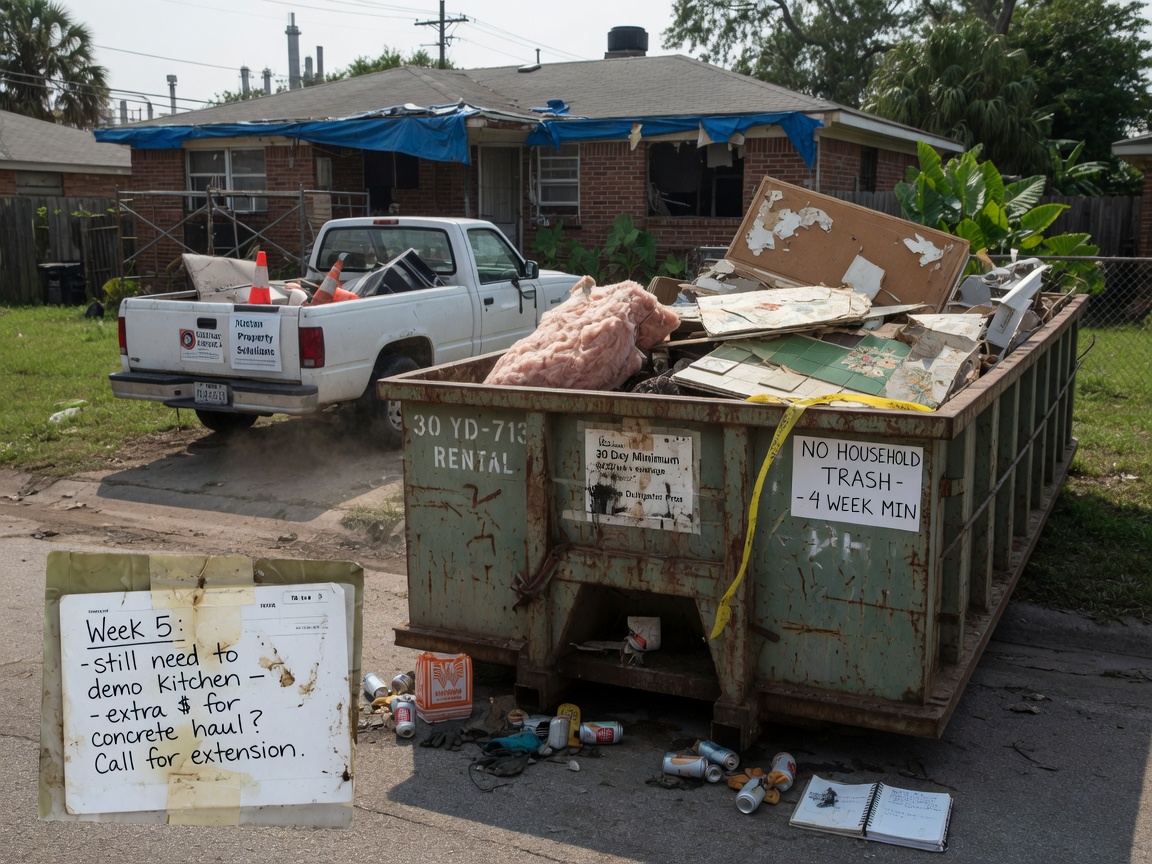
Property flips in Houston typically need dumpster rental periods of 4 to 8 weeks when dealing with full interior gut jobs in older homes. This range accounts for the time required to remove outdated materials from homes built before 1970 in areas such as the Heights and Montrose while coordinating with subcontractors. Shorter rentals often lead to multiple deliveries that increase overall project costs in Harris County.
Duration Planning for Flip Timelines
Long-term dumpster rental in Houston works best when matched to the actual scope of a flip rather than a fixed calendar. Homes in River Oaks and Midtown frequently contain layered renovations from past decades that extend demolition phases beyond initial estimates. Scheduling a 30-day minimum rental allows crews to handle unexpected finds like knob-and-tube wiring or plaster walls without repeated truck visits. In nearby Katy and Sugar Land, flips on larger lots sometimes stretch to 10 weeks when exterior grading joins interior work. Extending the rental in 2-week increments after the first month keeps costs predictable while avoiding idle fees during permit waits. Property owners who track daily fill rates can request swaps before overflow occurs, maintaining steady progress through the humid summer months when work slows.
Weather and Climate Impacts in Houston
Houston's subtropical climate with hot humid summers and mild winters changes how long-term dumpster rental performs on flip sites. Summer heat accelerates odor buildup in food waste and organic debris from kitchen remodels, requiring more frequent hauls from containers placed in Montrose or Downtown. Heavy rains common in Harris County can saturate loads, adding weight that triggers surcharges if not covered. Mild winters allow year-round exterior work but bring occasional freezes that stiffen materials inside the bin. Flips near the Houston Zoo or Museum of Fine Arts benefit from covered loads during storm seasons to prevent wind-blown debris. Operators who monitor forecasts adjust pickup schedules to avoid flooded access roads in Midtown, keeping projects on track without extra mobilization charges.
Placement and Permit Considerations in Neighborhoods
Placing a dumpster rental for extended periods on Houston streets demands attention to local rules that vary by neighborhood. In the Heights and Montrose, narrow lots often force bins onto driveways or alleys where they must sit for weeks without blocking neighbor access. Downtown flips require checking city right-of-way rules before committing to 6-week rentals, while River Oaks properties allow more flexible backyard positioning on larger parcels. Linking long-term needs to construction dumpster rental helps when multiple loads accumulate from phased work. Readers handling storm-related debris should review managing flood debris with a dumpster rental after Houston storms for additional timing tips. Proper placement planning prevents citations that halt flips in dense areas like Midtown.
Waste Types Common in Property Flips
Houston flips generate consistent waste streams that influence long-term dumpster rental sizing and scheduling. Older homes in the Heights commonly produce mixed loads of lath, plaster, and single-pane windows that fill a 20-yard container faster than newer builds in Pearland. Kitchen and bath gut-outs add tile, cabinetry, and fixtures that benefit from separate metal recycling to reduce weight charges. Construction waste removal through dedicated services keeps hazardous items like old insulation separated from general debris. Flips spanning 8 weeks often require at least two full hauls when drywall and flooring dominate the second month. Tracking material types weekly allows adjustments to bin size before the next delivery, maintaining efficiency across Harris County projects.