2026-10-19 · Mike Santos
How to Size a Dumpster Rental for a Houston Home Addition
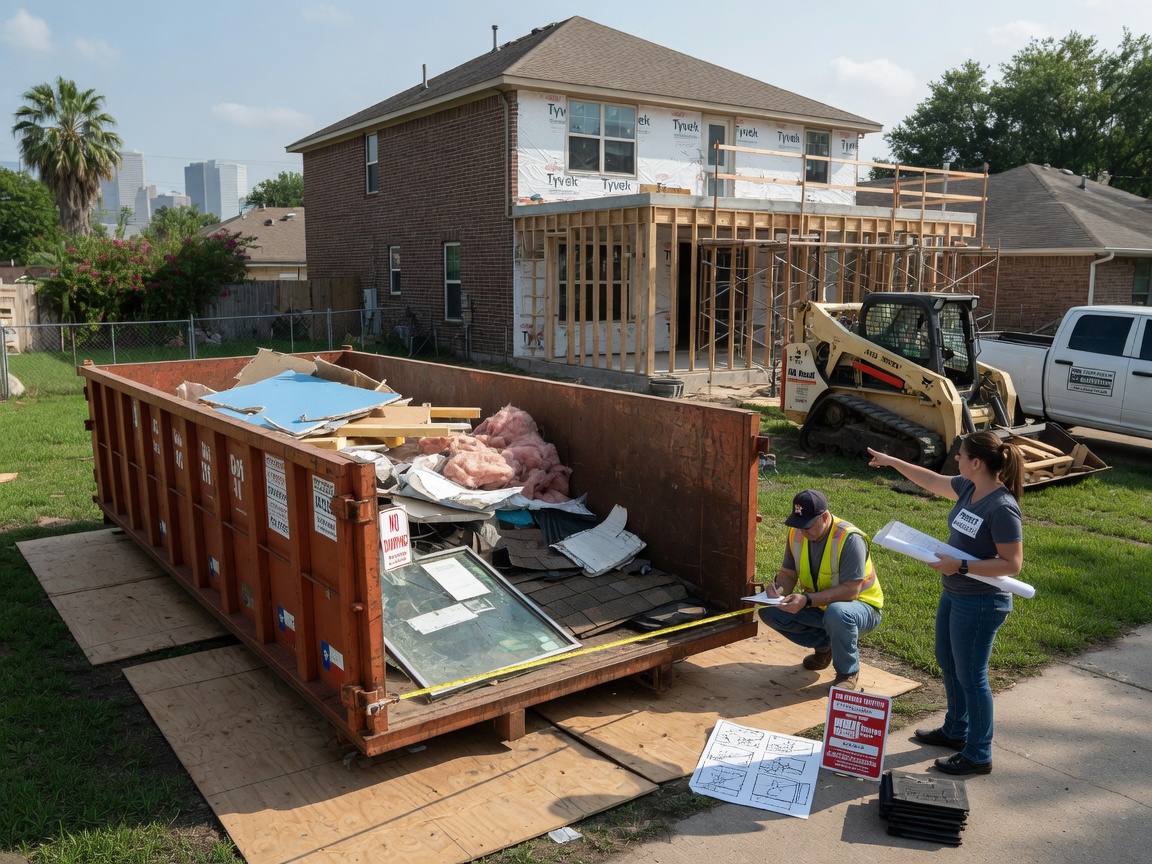
For a typical Houston home addition, a 20-yard dumpster rental handles the debris load from 300–500 square feet of new space when the mix includes framing lumber, drywall, and some concrete. Larger additions or those with foundation work often require stepping up to a 30-yard unit to avoid extra hauls.
Calculating Debris Volume from an Addition
Start by breaking the project into material categories. Framing and sheathing from a 400-square-foot addition usually generate 8–12 cubic yards of wood waste. Drywall offcuts and old interior walls add another 4–6 yards, while any concrete or masonry work pushes totals higher because of weight limits. Houston’s older housing stock in neighborhoods such as the Heights and Montrose often means removing plaster or lathe, which packs less densely than modern materials and can fill a container faster. Measure the square footage of both the addition and any demolition zones, then add 20 percent for unexpected items like old insulation or fixtures. This method keeps estimates grounded in actual volumes rather than guesswork.
Matching Dumpster Sizes to Project Scale
A 10-yard container works only for very small bump-outs under 200 square feet with minimal demolition. Most additions in River Oaks or Midtown need at least a 20-yard unit to stay under weight limits while accommodating bulky items. When the job includes new footings or slab sections, a 30-yard dumpster prevents overflow because concrete debris weighs roughly 4,000 pounds per cubic yard. Check local permit rules in Harris County before ordering; some subdivisions limit container sizes on streets narrower than 30 feet. Always confirm the hauler’s weight allowance, since exceeding it triggers extra fees even if space remains.
Site Access and Placement in Houston Neighborhoods
Narrow driveways common in the Heights and Montrose require a residential roll-off dumpster rental with a smaller footprint so the truck can position without blocking traffic. Flat lots in Sugar Land or Pearland allow easier placement on the street, but check for overhead power lines that limit swing radius during delivery. In Downtown or Midtown, alley access may dictate a rear-load style instead of a roll-off. Measure the clearance at gates and note any low branches before scheduling; Houston’s mature tree canopy often forces containers onto the driveway rather than the lawn to avoid root damage.
Accounting for Local Climate and Soil Conditions
Houston’s subtropical climate brings heavy spring rains that can turn clay soils soft, making it harder to position a loaded construction dumpster rental without sinking. Schedule delivery after a dry spell when possible, or request plywood sheets under the wheels for stability. Mild winters extend the work season, yet sudden downpours can waterlog debris and increase weight, so order an extra yard of capacity during humid months. In flood-prone pockets near Buffalo Bayou, keep the container elevated on blocks to prevent standing water from mixing with waste.
See how costs compare on similar projects in What Houston Homeowners Pay for Dumpster Rental on Kitchen Remodels. For full service details, review Construction Dumpster Rental and Residential Dumpster Rental.